

Der erste Video Recorder hatte 1956 die Welt noch einmal verändert, wie damals 1935 das erste Tonbandgerät.
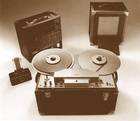
- 1935 - das Magnetophon - hier ein AEG K2 - erfolgreich

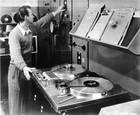
- 1948 - Ampex 200A aus USA - erfolgreich

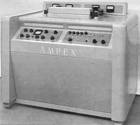
- 1956 - Ampex VR 1000 aus USA - erfolgreich

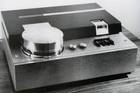
- 1967 - Telefunken Prototyp- gescheitert

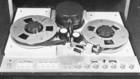
- 1972 - Philips Fese Versuch BCR40- gescheitert

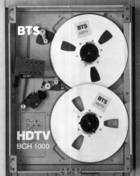
- 1992 - Fese/BTS HDTV Videorecorder Prototyp

Der erste theoretische Videorecorder bzw. die Idee solch einer Funktion zur Speicherung eines bewegten Bildes auf magnetischer Basis wurde bereits 1932 von Dr. Fritz Schröter samt der theoretischen Schrägspuraufzeichnung an der TH in Berlin konzipiert und beschrieben. Es wurde jedoch damals physikalisch nie realisiert, es ging halt noch nicht.
Dr. Schröter war lange Jahre in der Fernseh- Entwicklung bei Telefunken, dem damaligen Wettbewerber der Fernseh AG. Im Jahr 1936 war er maßgeblich an der Entwicklung der sogenannten Fernsehkanone beteiligt. Die gesamte Optik und Mechanik stammte damals von Emil Mechau, die Elektronik von Dr. Schröter.
Mit dem Tonbandgerät fing es an . . .
Vor dem ersten realen Videorecorder lag noch
- das deutsche AEG Magnetophon K1 von 1935 (rechts oben),
- das Ende des zweiten Weltkrieges . . . . .
- und das amerikanische Ampex Tonbandgerät 200A von 1948 (2. Bild).
-
Dann erst kam der Video-Recorder . . .
Der erste wirkliche real funktionierende Videorecorder war ein Ampex VRX-1000 von 1956 (3.Bild). Die anderen von RCA und Bing Crosby und EMI in England in dr Entwicklung befindlichen und/oder geplanten Konstrukte waren nicht reif, funktionierten nur im Labor oder gar nicht.
.
In der Magnetbandtechnik gab es drei Aufzeichnungsmethoden:
.
- Die Längsspur-Aufzeichnung,
- die Querspur-Aufzeichnung und
- die Schrägspur-Aufzeichnung
.
Anfangs dominierte die Querspur-Technik Namens Quadruplex von Ampex
Und es dauerte bis etwa 1973, bis die Schrägspuraufzeichnung reif war, - alle vorherigen Konstruktionen hatten große Probleme.
Etwa 1962 hatte die Farbe in diese Video-Profitechnik Einzug gehalten hatte, und von nun an ging es von nun an Schlag auf Schlag.
Selbst die Deutschen aus Darmstadt spielten weltweit auf einmal wieder eine nennenswerte Rolle - basierend auf den Arvin/Echo Schrägspur-Entwicklungen, die die FESE/BTS ab 1975 als BCN 40/50 und später als BCN 41/51 vertrieb.
Endlich hatte die FESE/BTS ein hervorragendes Video-Produkt, das jetzt im Profi-Fernsehen eine gelungene Weltneuheit war und das sie in größeren Stückzahlen verkaufen durfte und konnte, ohne damit das Quadruplex Patent von Ampex (verkettet über RCA) zu verletzen.
Mit dieser neuen Fese 1" MAZ setzte der Umschwung ein und Ampex bekam weltweit die ersten Probleme. Auf den folgenden Seiten kommen ein paar Berichte und Artikel über Entwicklungen aus dieser Zeit, die bemerkenswert waren.
.